

Deep Sabbatianism pt. 3 Abraham Cardozo

The great theologian of Sabbatianism, Abraham Michael Cardozo, from a family of Maranos, anusim, of Spanish descent - probably the most important figure in Sabbatianism in that first generation, after Shabbtai Zvi and Nathan of Gaza.

He wrote a bunch, and traveled and shared his writings and interpretations, and here provides us with a nice text to read, that touches some of the themes seen previously, the paradoxical logic and twisting or reinterpretation, and the art of dissimulation, and also some of the Christian messianic thinking mixed in, as well as the experience of being a forced convert:
“Most people, the scholars of our generation included, have supposed that king messiah is to come in power, working signs and miracles and wonders. Thus they have fallen into great error.
Know this: that the sages have said that Israel is destined to utter a song, “but they cannot sing it until the messiah shall have suffered abuse, as it is written, ‘Flung abuse, abuse at Your anointed at every step’” [Ps 89:52].
Also, they say, the Lord has divided torments into three parts, allotting one part to David and the patriarchs, one part to our generation, and the third part to the messiah, for so it is written, “But he was profaned because of our sins” [Is 53:5].
Commenting on the verse “I will receive him back in love” [Jer 31:19], the sages tell us that the messiah is destined for prison. He is to be the butt of everyone’s insults, scorned, a person despised and loathed, many of the Jewish people insulting and abusing him, calling him “plagued, smitten, and afflicted by God” [Is 53:4]. King messiah, in short, is fated to be supreme over the angels, and yet brutalized and vilified by all.
These two opposites cannot be obtained at one and the same time. Rather, he must first be lowly, deemed by the Jews a loathsome villain, suffering torments and all that he was doomed to endure on account of Israel’s transgressions; for it was on this condition that he entered the world and for this purpose he was created. Afterward shall he ascend to lofty rank, fulfilling all the glorious things spoken of him by the prophets and by our ancient Sages of Blessed Memory.
One must not fall into the opinion of those who assert that Sabbatai Tsevi cannot be [the] messiah because he did not come in glory, working signs and wonders. Whenever the “true messiah” (as they think [of] him) may come, those people still will not be able to believe in him. For anyone who comes and is not insulted, scorned, and loathed cannot possibly be [the true] messiah…
Now we arrive at the great secret: True, the Turk threw Sabbatai Tsevi into prison and afterward summoned him. The mufti and his sages took counsel together and decided against killing him, inasmuch as he had a worldwide reputation as messiah. If they were to put him to death, those in distant parts might be misled into creating a new religion, some of the Turks also having been caught up in the uproar. Better to dress him, willing or not, in Turkish garb; and this was precisely what the Turk did.
So king messiah’s aim was to undergo martyrdom, while the Turkish king’s was to dress him in garments of shame, as he had been advised. In each and every respect, then, [Sabbatai] was a forced convert, our iniquities being the cause.
The crux of the secret: all of us were condemned by the Torah to become forced converts before we might leave exile.

For thus it is written in the Torah: “You shall serve other gods, of wood and stone” [Dt 28:36], measure for measure, we having of our own free will violated the Torah and worshipped other gods, inflicting profanation on God’s name, such that His blessed Name was profaned among the Gentiles on account our transgressions.
Thus it was an act of justice, explicitly decreed in the Torah, that we should adhere to alien cults and violate the Torah among the Gentiles, this time under compulsion and against our will. Having been ourselves profaned and forced into apostasy, we should then have cried out unto the Lord.
It is a known fact that every one of the kings of Israel worshipped idols, and [was] therefore cast out from God’s presence. Even Judah, [who] remained under the kings of the Davidic lineage, forsook the Torah. (So it is written: “Because they forsook the Teaching” [Jer 9:12].) It is also a known fact that kings are considered equivalent to their people and are punished by God for the people’s sins, as the Zohar and the Gemara tell us plainly.
Thus it was that the Lord ordained that the two messiahs must suffer torments, punishment, and profanation on account of the iniquities of Israel…
The case of Esther, through whom the Jewish people experienced a dramatic rescue, is comparable. The bulk of Diaspora Jewry detested her for having attached herself to an idolatrous Gentile, an act utterly forbidden by the Torah. But the Sages - who knew this secret, all of whom recognized the truth of the matter - refused to brand her a sinner.
Accordingly, they ruled in the Gemara that “Esther was entirely passive,” meaning that without any action on her part she could be compelled against her will, and she could not be held responsible for an action that the doer was able to accomplish without her agreement. That was the case [with Shabbtai Tsvi], whom the Turk, unwilling to execute him, clothed against his will…
If there is anyone with you who realizes that the words “Awake, awake, clothe yourself with splendor, O arm of the Lord! [Isaiah 51:9] applies to the Shekina, as do the words “Shout, O barren one, you who bore no child!” [54:1] - if he has reached the stage where can understand on his own who is the subject of the passage from “So marred was his appearance, unlike that of man,” as far as “made intercession for sinners” [52:14-53:12]...
then that person will be able to grasp the true Kabbalistic significance of this great secret, awe-filled and sealed away: why the messiah had no choice but to undergo a forced conversion to atone for the transgression of Israel why messiah ben Joseph was irrevocably condemned to profanation among the adherents of an alien faith, yet his violent death was conditional. He will understand also why [messiah ben Joseph] must die.
Up to this point I set matters forth truly and clearly. I am confident that very soon the Sun of righteousness will step forth, bringing healing to those who honor his name and yearn for his salvation, which is near at hand. Then will be revealed the righteousness of our messiah, the messiah of the Lord our Righteousness, Shabbtai Zvi.”
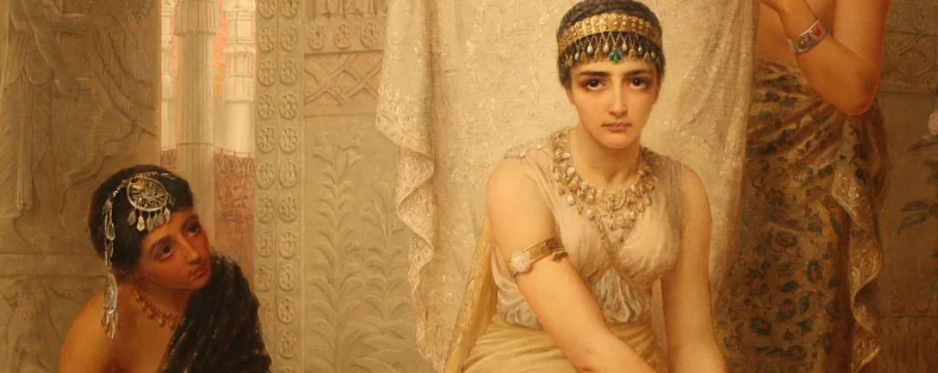
This is just one excerpt, but in it we see the application of Esther, entering the impurity, on a mission, so was Shabbtai Zvi. So at the same time he is saying that Shabbtai Zvi did not willingly convert to Islam, but also he is saying that it was a somewhat conscious special mission, as if he chose it.
Cardozo is interpreting Shabbtai Zvi as a Jewish Messiah, as if so different from the Christian Jesus, yet the emphasis on Isaiah 53 and the Messiah as a suffering servant is hard to ignore the Christian influence.
He does use the double messiahs model instead of the second coming of the one messiah. But again, that could also be seen as Christian influence - the logic of interpreting the messianic prophecies as two sets of messianic activity or 2 separate messianic careers. (Not to mention, the presumption that the Messiah must die, as part of his messianic program.)
The most interesting aspect in my opinion is spiritualization of the conversion experience, and then the projection of it onto the messiah and all sorts of biblical characters, along with the anusim: Cardozo is saying it is almost like the universal Jewish experience - forced conversion and dissimulation, from the forefathers, through biblical heroes and heroines like Esther, and then the Jewish people over the centuries, including the anusim and all of us, essentially.


Comments